Thursday, February 14, 2013
Post #6: Patent Trolls: Stifling Growth?
As mentioned in my previous blog post, non-practicing entities purchase patents to then sue other companies for money. Also known as patent trolls, these people are now being attacked by our very own President Obama because all they do is coerce other companies. Patent offices are such an important institution because they do so much for protecting inventions and letting companies flourish through competitive advantages. But now, they are under risk of these trolls who just want to sue and make money, when instead the patents could be going to a company that actually needs to use the invention to create their product. Government has been slow to keep pace with technological growth and advancement -- so many laws are now either outdated or don't even exist for our technology structure today. Government needs to step up and prevent these patent trolls from doing real damage before it's too late.
Article:
http://mashable.com/2013/02/14/obama-patent-trolls/?utm_source=feedburner&utm_medium=feed&utm_campaign=Feed%3A+Mashable+%28Mashable%29
Post #5: The Power of Patents: Google sues British Telecom with Motorola Patents
This past class we learned about non-practicing entities that purchase patent rights to then sue companies that use that certain invention. Although Google suing British Telecom with Motorola patents is not an example of this, it is essentially the same thing. Since Motorola was bought out by Google, it gave Google the ability to own all of its patents and then use them to sue other companies who attempt to infringe. In this case, Google was able to secure 17,000 patents and is still waiting to hear about 7,500 more, just to be able to use them as leverage over other companies.
This latest round of Google's lawsuits is especially interesting because it is coming after BT sued Google for claiming it infringed on patents of its own. In response, Google is using the Motorola patents it recently purchased to counter sue. This highlights the back and forth nature of patent wars, which seem to be never end nowadays. We can only wait to see what the outcome will be.
An interesting fact at the end of the article that I thought was worth mentioning is that "Only 5,462 [patents] were filed at the height of the technology boom in 2000, but more than 14,200 were lodged last year". We can see the increasing importance of patents as everything is becoming even more competitive in the mobile market since it expects to increase to a 500 billion dollar industry in the next few years. For these companies, owning these patents is what gives them a competitive edge and slowing down their competitors in litigation battles is all part of the game to own the most market share.
http://www.telegraph.co.uk/finance/newsbysector/mediatechnologyandtelecoms/9869327/Google-uses-Motorola-patents-to-sue-BT.html
Sunday, February 10, 2013
Post #4: A Close Relationship Gone Astray
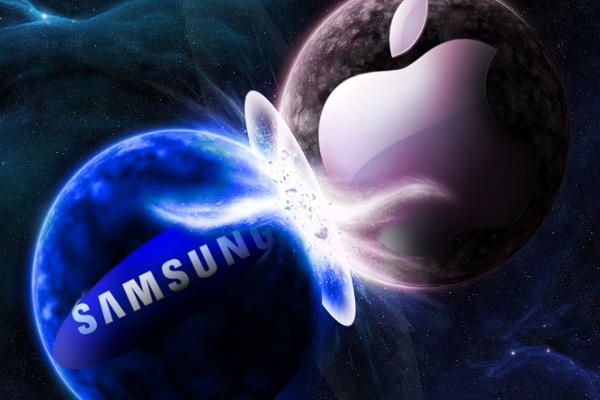
We've all heard about Apple suing Samsung because they were upset with how they designed their newest phones. The media made it seem like an all out war between the two where no one would back down and that Apple and Samsung were and have always been mortal enemies. However, after reading this article:
http://news.cnet.com/8301-13579_3-57568584-37/tim-cook-reportedly-opposed-patent-suits-against-samsung/
it is clear the relationship between the two is much more intertwined, then at least I had previously thought. Seeing that Apple relied heavily on Samsung as a components supplier, the whole idea of going into court over a patent seemed ill-mannered to Tim Cook and Steve Jobs. It seems that in this case not everyone was interested in just spending huge sums of money to sue one another because it would do much more then just resolve a patent dispute, it would also strain personal and professional relationships. As mentioned in the article, Samsung and Apple began working very closely with each other and even the grandson of Samsung's founder ended up visiting Steve Job at home. However, since the two companies never reached a reciprocal patent agreement, they were unable to to come to an agreement and the trial would surely take place. Now, Apple is seeking ways to distance itself from reliance on Samsung parts. It is interesting to see how these two companies relationships have evolved over time, and clearly they're in a stage where they're not so close anymore.
Monday, February 4, 2013
Post #3: Recognizing IP (Trademarks, Copyrights and Trade Secrets)
Today in class, we learned how to identify trademarks, copyrights and trade secrets.
1. Apparently, it is very cheap to hold a trademark and typically large corporations hold onto many throughout the world. While one company may purchase a trademark in the United States, it is not applicable in another country. A trademark is a logo, symbol, name or device used to identify a service.
2. Copyrights are a tool used to prevent someone from copying your product. Nowadays, these are extremely common as musicians, software companies and the movie industry use copyrights to make it illegal to use their product without permission and often with financial compensation for themselves. Even though there are websites that exist where you can download these files illegally, having these laws in place makes sure that at least the creators get some fair compensation and the violators are punished.
3. Trade secrets are any sort of information that is valuable and confidential. These include: customer lists, sales or profit date, product weaknesses, internal designs and processes and procedures. Most importantly, the trade secret is the crux that makes the company so successful because it is what gives its competitive advantage. For example, my dad's company, Mixografia, which creates 3-dimensional hand paper prints, uses machines and processes (that my dad invented and patented) in order to create what he does. His company is the only print-maker in the world that is able to create 3-dimensional prints and is what gives him the competitive advantage over other print makers in his field.
Wednesday, January 30, 2013
Post #2: Why am I taking this class?
I am taking this class to ultimately learn how to get and protect a patent if I ever invent something worthwhile. Seeing as my dad holds numerous patents, I am interested to learn how he went about acquiring them and what will take to protect them. Also, since the mobile industry is projected to grow to 500 billion in the coming year, taking a class in this field could prove to be quite useful later on. Overall, I am curious to see what this class entails because as of now my knowledge about patents and the mobile industry is quite low. I hope to use this class as a learning experience and gain insight into a sector I am not yet very familiar with.
Post #1: About Me
My name is Adam Remba, I am a second-year Political Economy and Geography double major from West Los Angeles . This is the second class I have taken in the IEOR department and look forward to a great semester. Currently, I am the Co-President of TAMID Israel Investment Group which runs an investment portfolio of International Equities/Equities with ties to Israel and I work for Campus Recycling and Refuse Services, leading a campaign that's directed towards Zero-Waste by 2020 on our UC Berkeley campus. I enjoy skiing, soccer and basketball and anything sports related to Los Angeles.
Subscribe to:
Posts (Atom)